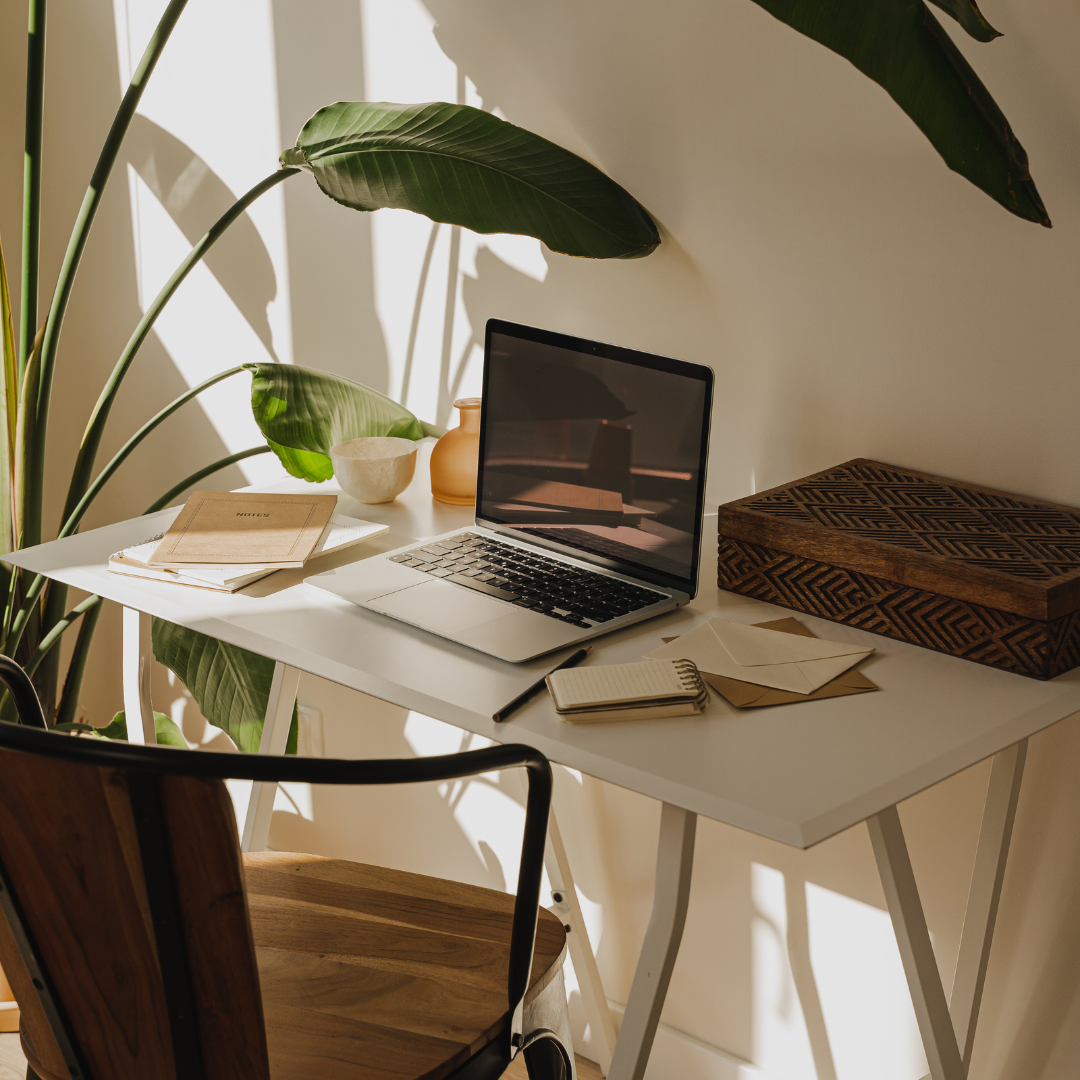
A thoughtfully arranged workspace can make a difference to how you feel, focus and function throughout the day.
Think about where you work at home. Is the chair comfortable? Can you reach what you need? Does the space help you concentrate? Or have you simply stopped noticing the little things that don't quite work?
It's surprisingly easy to make do.
A spare chair and a table become a temporary workspace. You get used to the awkward height, the poor lighting or the constant shuffle of papers. Unless something becomes uncomfortable enough to demand attention, changing it rarely feels urgent.
But temporary arrangements have a habit of becoming permanent.
A workspace that works for you
Over the past few years, more people have found themselves working from home, whether full-time, part-time or somewhere in between. Yet our homes haven't always changed to reflect that.
A good home office isn't necessarily a separate room, a large desk or a perfectly styled backdrop for video calls.
It's a space that supports the way you actually work.
Here's something worth considering. Have you arranged your workspace around the way you work or have you simply adapted the way you work to fit the space available?
Someone who spends most of the day on online calls may need something quite different from someone who works with drawings, samples or paperwork. One person concentrates best in a quiet, cocooning space; another feels inspired by daylight and a view of the garden.
There is no single formula.
Before I think about furniture or colours, I want to know how someone uses the space. What works? What frustrates them? How does it feel now and how would they like it to feel?
The difference between tidy and organised
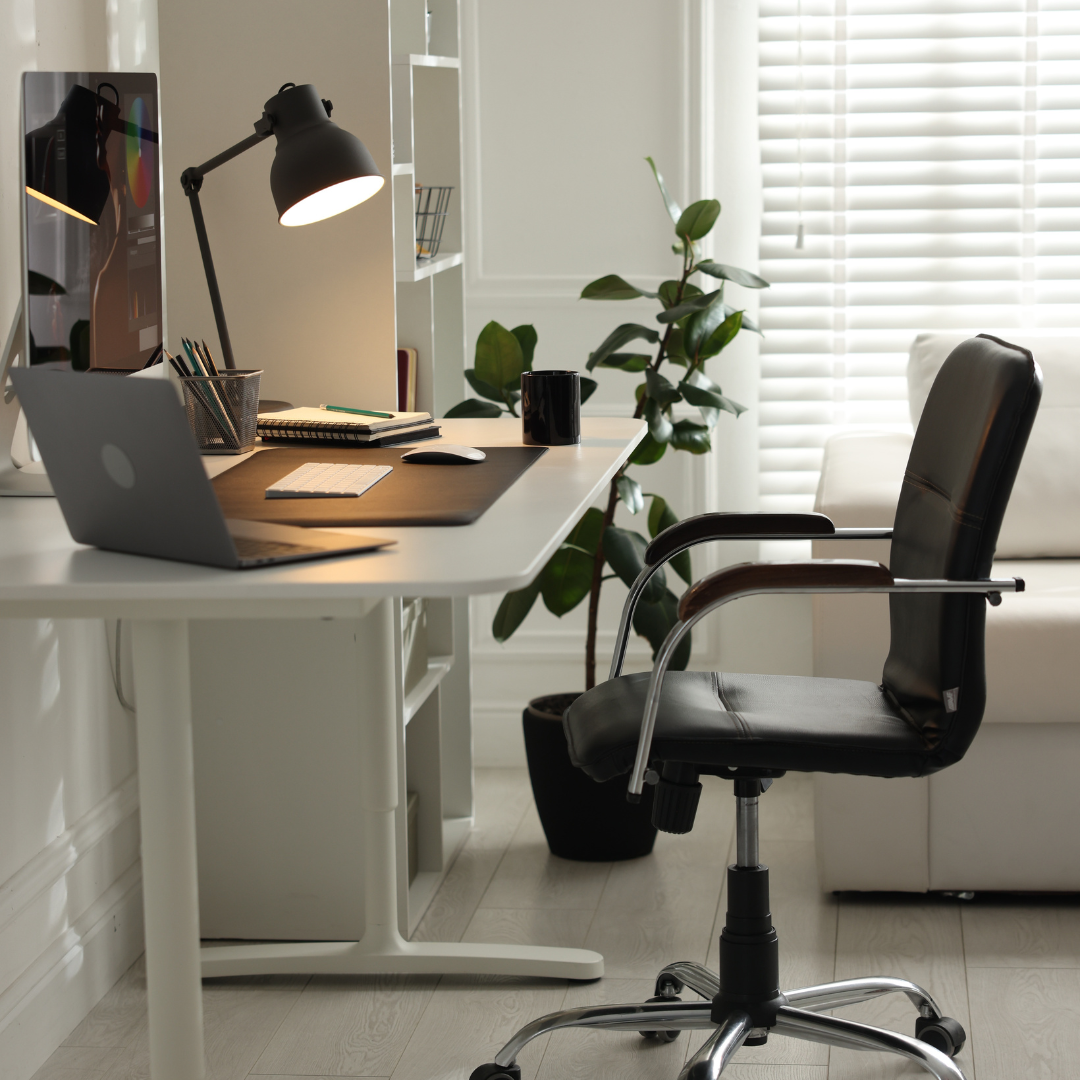
A workspace that functions well considers more than just the desk. Good lighting, comfortable seating and practical organisation all make a difference to how you work.
An organised workspace doesn't have to be minimal. For me, organisation means knowing where everything is and having a place for what you use.
A creative person's desk may be covered in sketches and materials yet still function beautifully. A spotless desk, on the other hand, can be frustrating if the things you need are always out of reach.
Think about your own workspace. How often do you have to get up to find something, move things out of the way or interrupt what you're doing because something isn't where you need it?
These little interruptions become so familiar that we barely notice them. Yet they're often clues that the space could work better.
I look at where furniture sits, how someone moves around the space, whether everyday essentials are easy to access and whether there's enough light for the task at hand.
Then there's the harder-to-define question: does the room feel right?
How a space feels matters
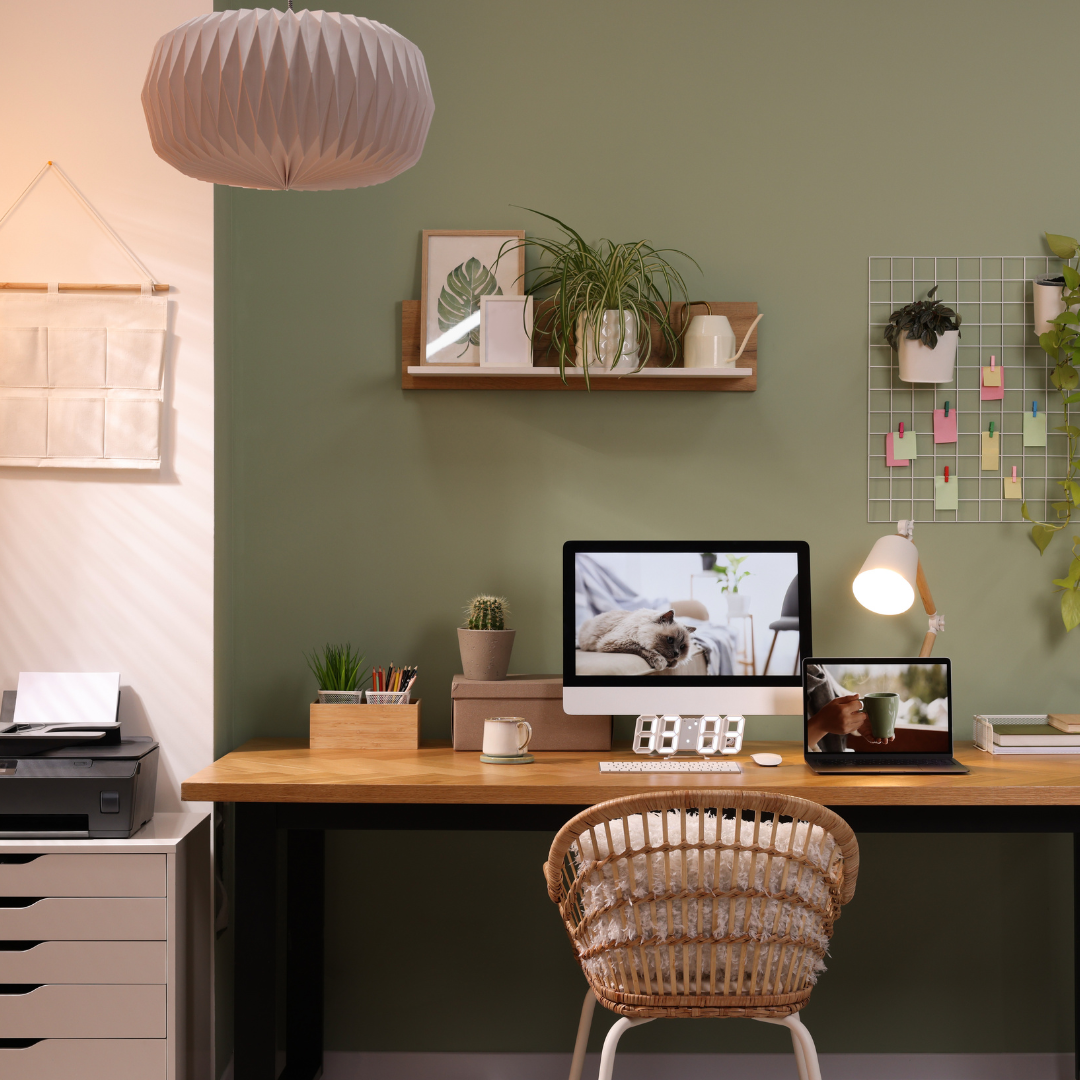
Colour, natural materials and personal touches can transform a functional workspace into somewhere you genuinely enjoy spending time.
Light, colour, texture and the things we choose to surround ourselves with all contribute to the atmosphere of a room.
A plant borrowed from another room, a meaningful object or a reminder of what motivates you can make a workspace feel more personal.
Natural light and views of greenery can be lovely but they aren't automatically the answer to everything. A sunny window might create glare on a screen; a view might be inspiring for one person and distracting for another.
And not every part of the working day needs to happen at a desk. Sometimes moving to a comfortable chair to read, think or take a break is exactly what we need.
When was the last time you stopped to consider how your workspace actually makes you feel?
Do you look forward to sitting down to work or is it simply somewhere you go because that's where your computer happens to be?
The aim isn't to create a workspace that looks like somebody else's ideal. It's to understand what helps you feel comfortable, focused and inspired.
Making room for work and home
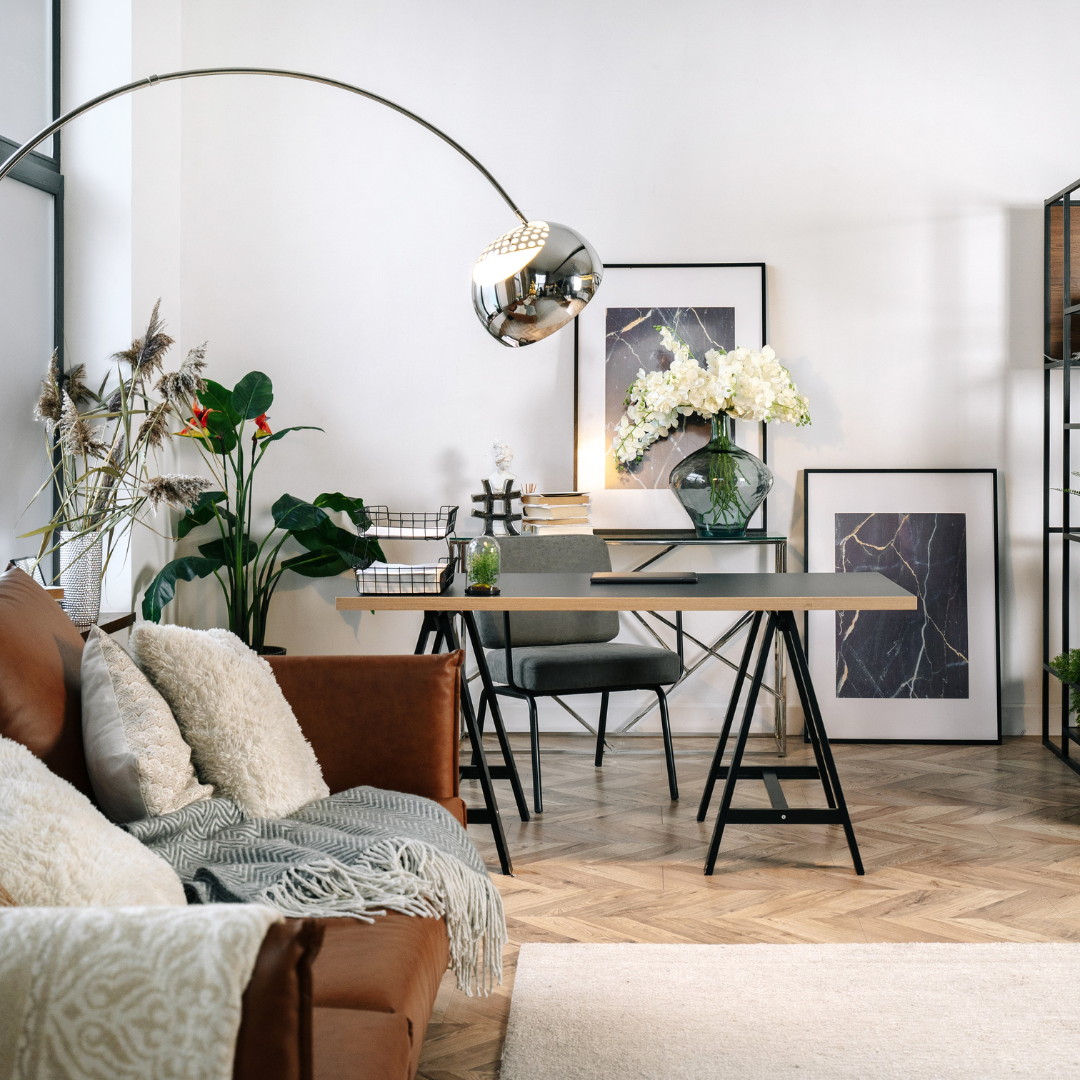
Not every home office needs a dedicated room. With careful planning, a workspace can fit comfortably into your living space without taking over.
I work at the dining table, which is in the kitchen.
At the end of the day, I put away the physical things I've been working on and close my laptop. That simple action tells me the working day is over.
It works for me.
Someone else might need a desk they can shut away or a clearer visual separation between work and home.
I wouldn't usually choose a bedroom as a workspace because I believe it should be somewhere dedicated to sleep and rest. When space is limited, the best solution is the one that balances practical needs with the way someone lives.
Small changes can shift the feeling
You don't necessarily need to buy anything to improve a home office. Try giving the space a proper clean and tidy then notice what happens when you put things back.
Could the desk sit somewhere else? Would a lamp from another room help? Is there a better place for the things you use every day?
I've found that when I tidy my own workspace, I often rearrange things without planning to; even a small change can make the room feel different.
But before moving anything, ask yourself what's actually bothering you.
A tidy room isn't automatically a room that works well.
Look again
Perhaps your home office began as a temporary solution and has simply stayed that way. Or perhaps you've worked in the same room for years and stopped noticing what you've learned to tolerate.
Either way, it's worth looking at it with fresh eyes. How does it feel? What works well? What have you been putting up with?
Most importantly, does your home office really work for you or have you just got used to working this way?
If you'd like a little help seeing your space differently, explore Edition 05 of my free One Room at a Time Transformation Guides. You'll find simple questions and a Five-Minute Flow Fix to help you get started.
One Room at a Time: Edition 05, The Home Office
This article is part of my One Room at a Time series, where we explore a different room each month through Feel • Function • Flow.
Each edition includes a free Transformation Guide with simple exercises, designer tips and small changes you can try in your own home.
Join One Room at a Time for practical ideas, monthly inspiration and new Transformation Guides to help you create a home that works for the way you live.